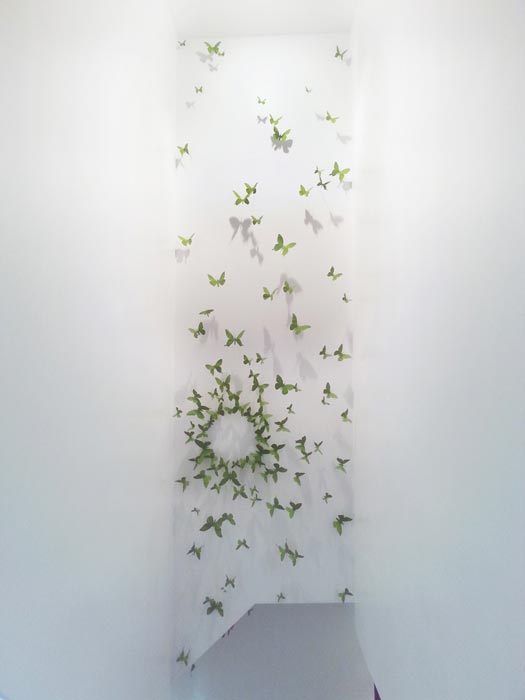
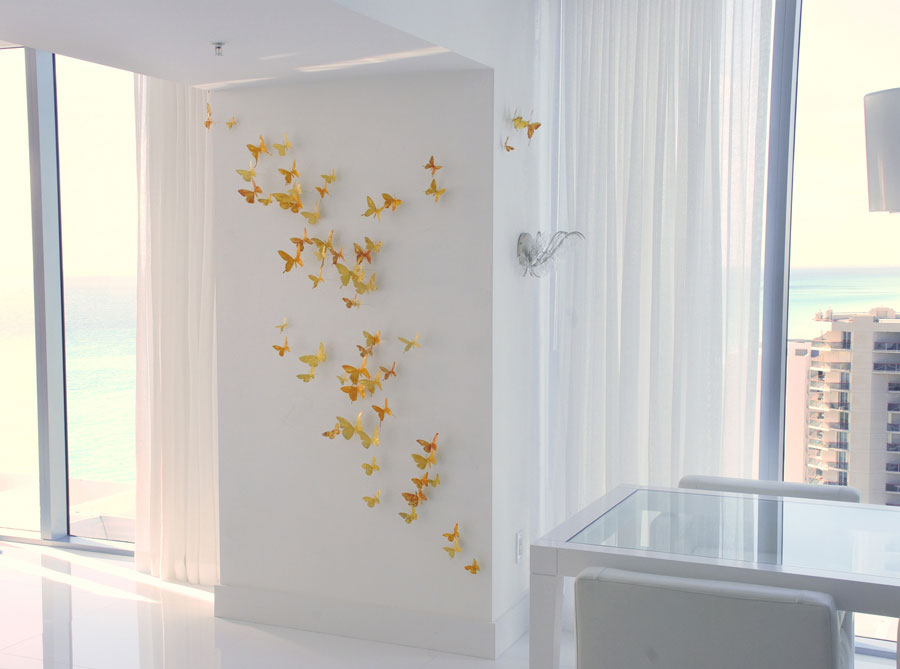
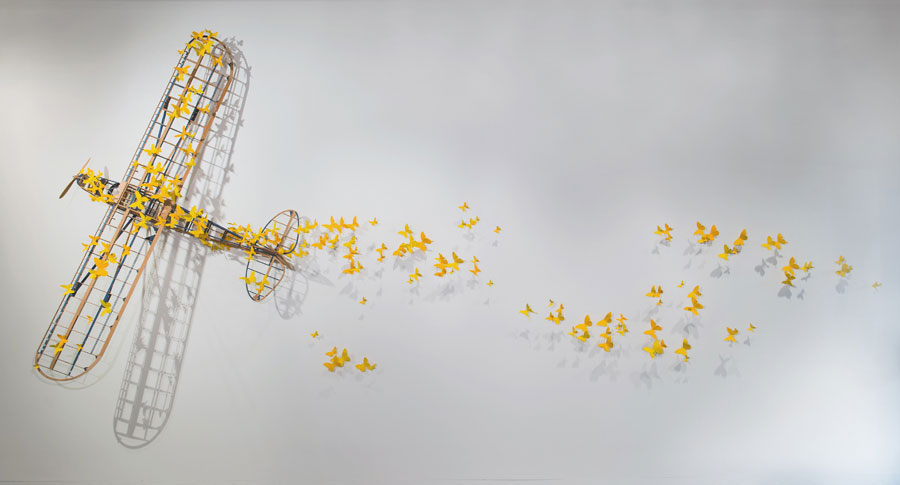
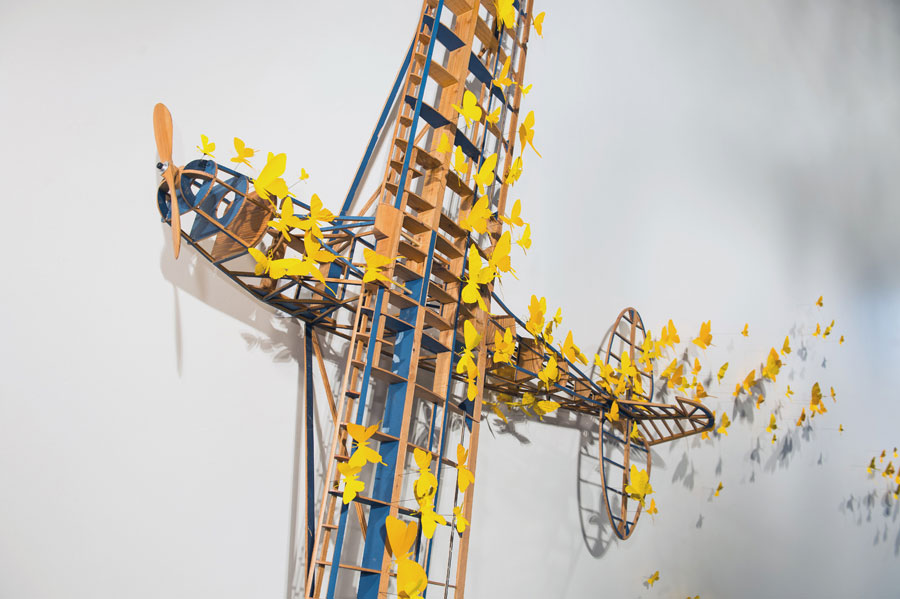
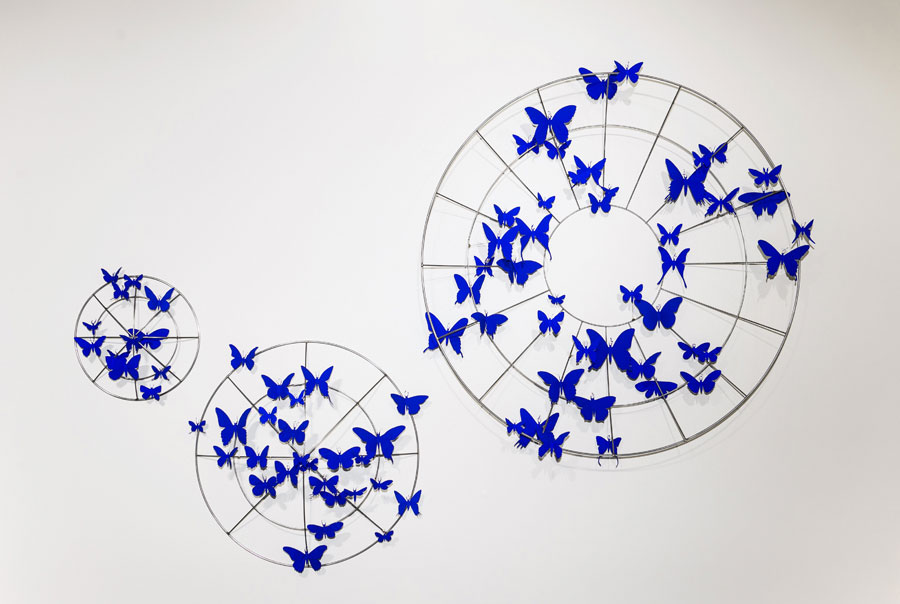
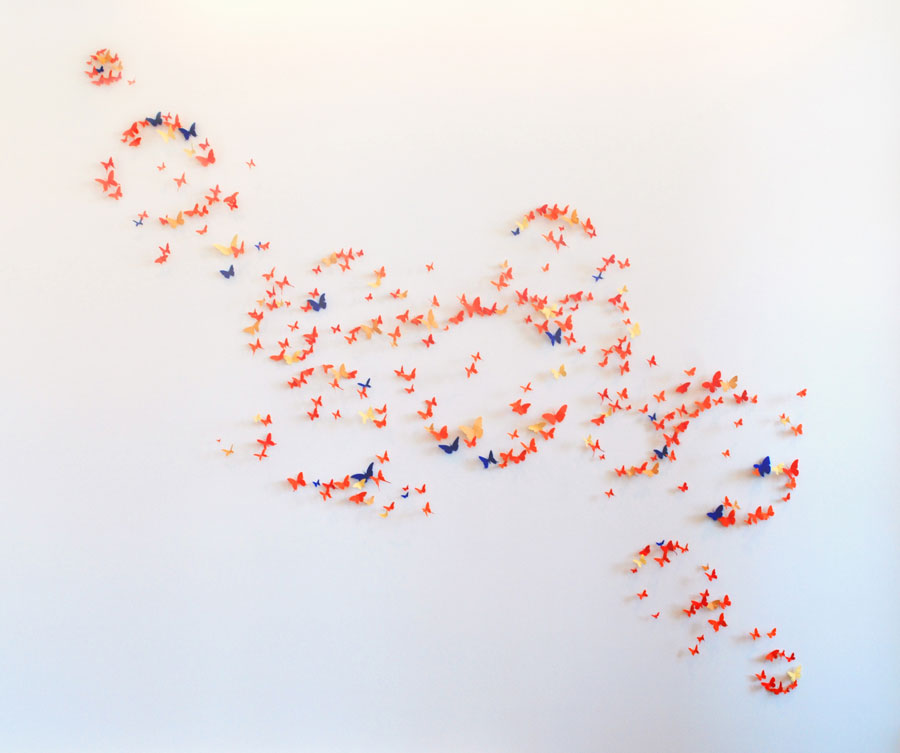
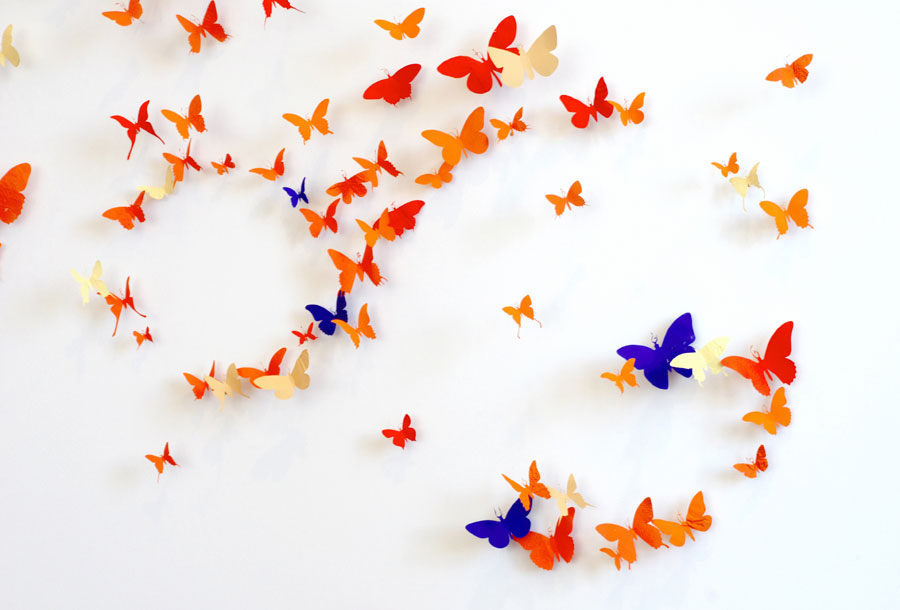
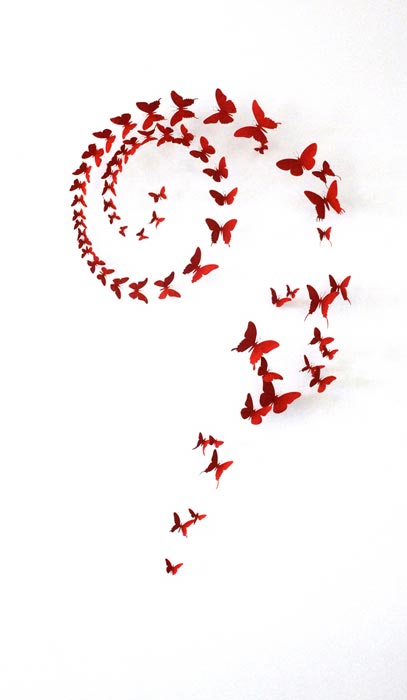
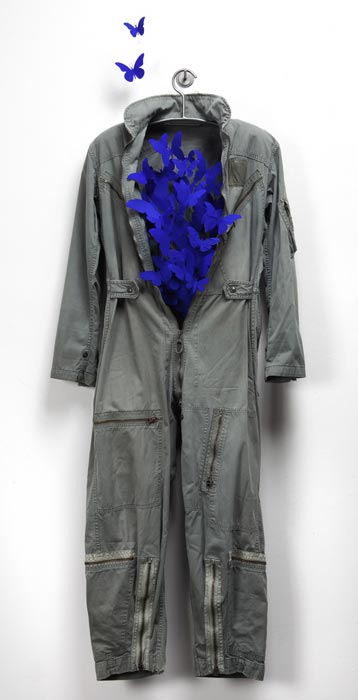
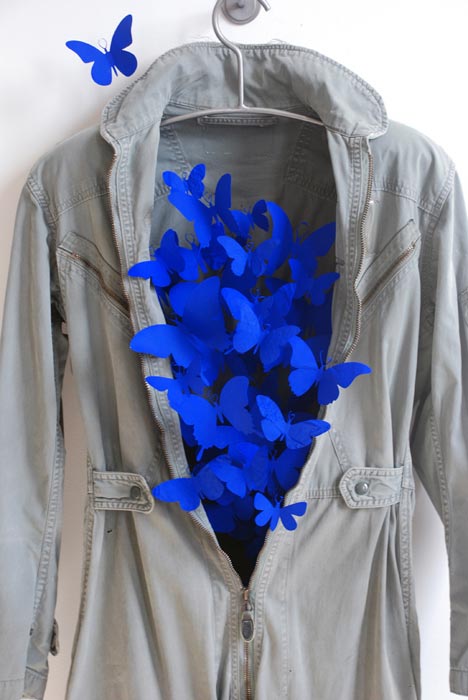
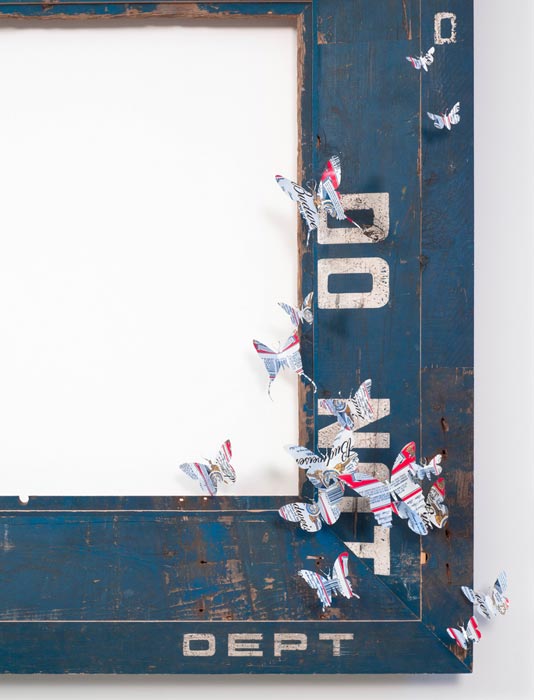
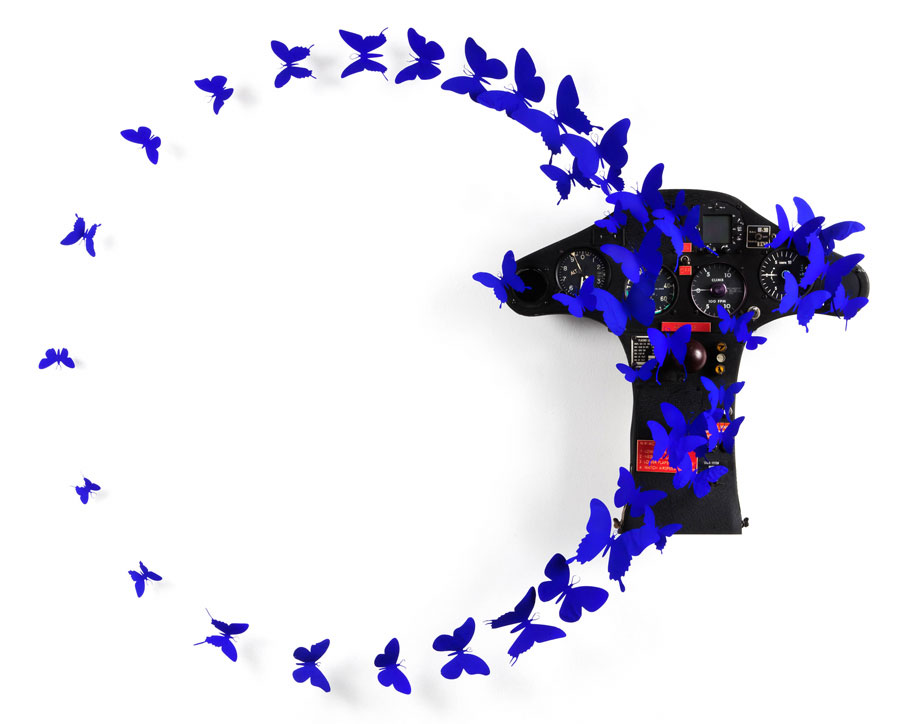
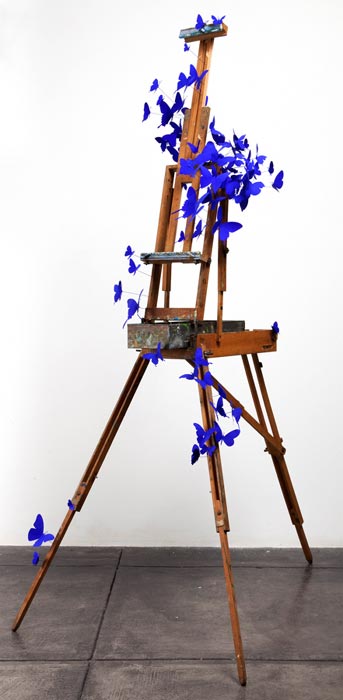
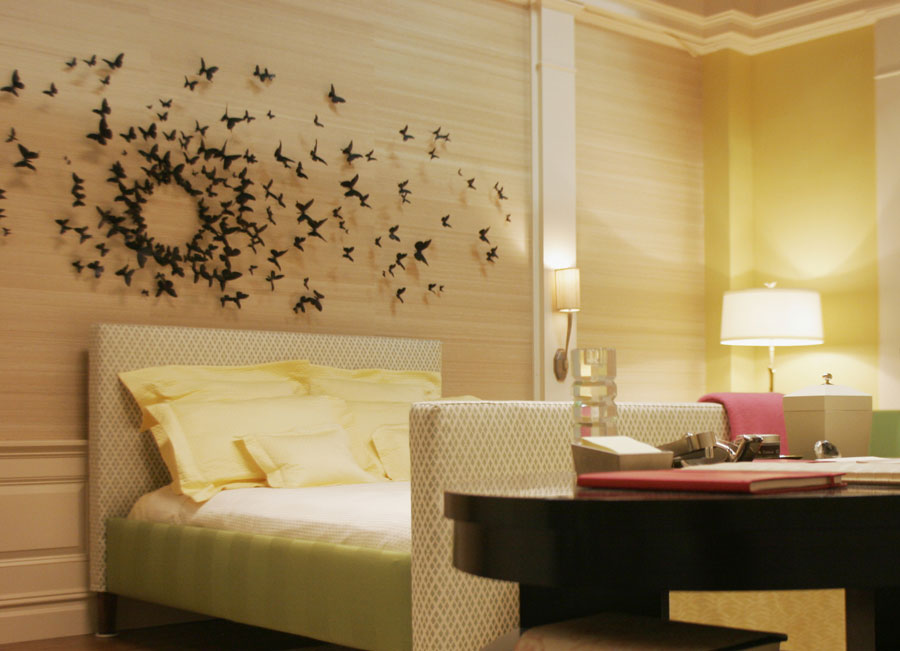
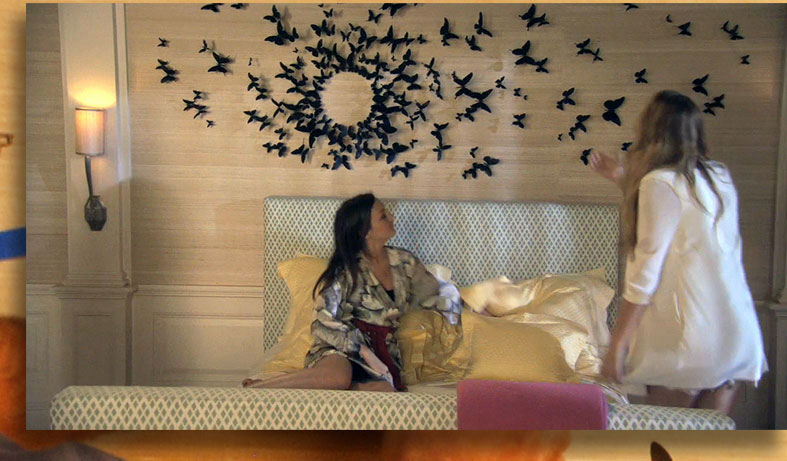
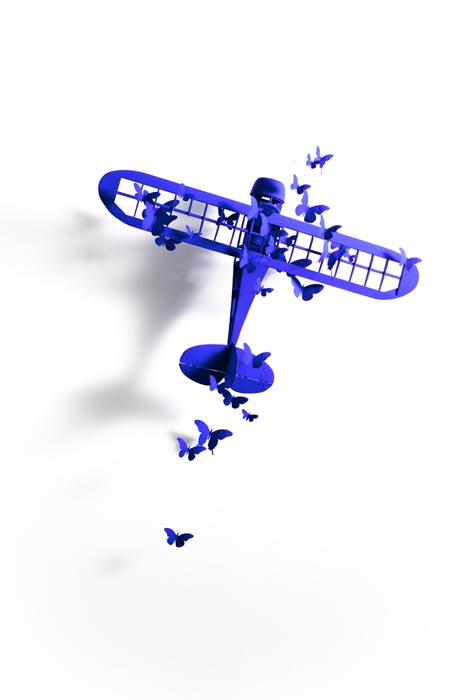
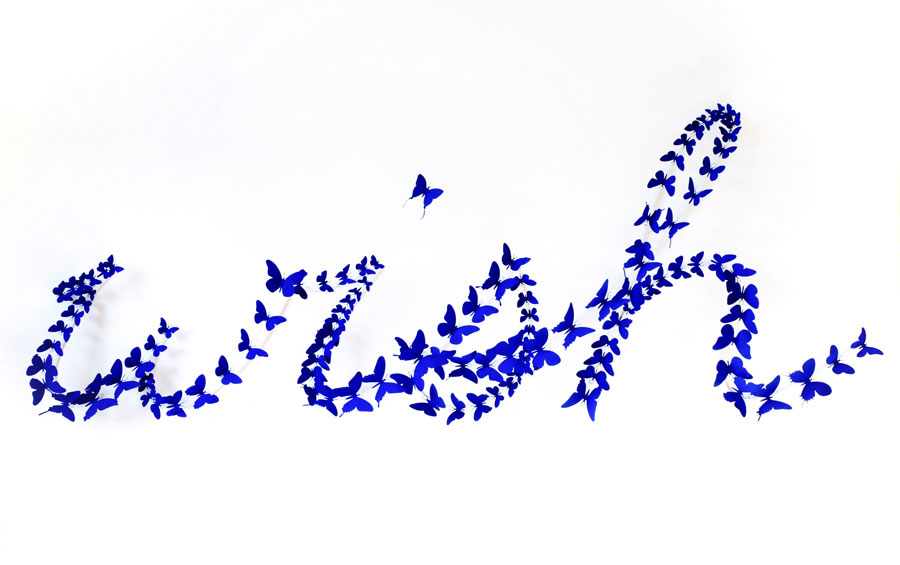
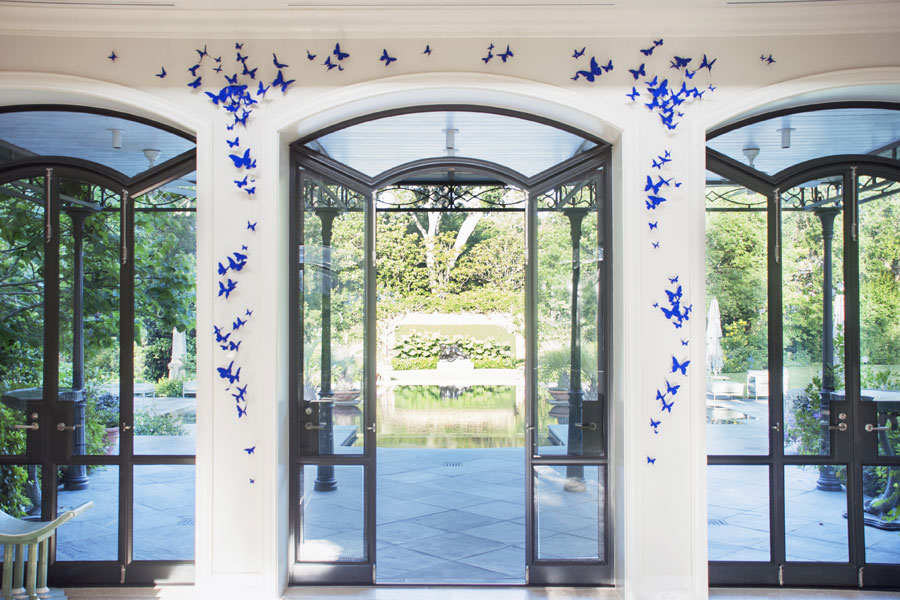
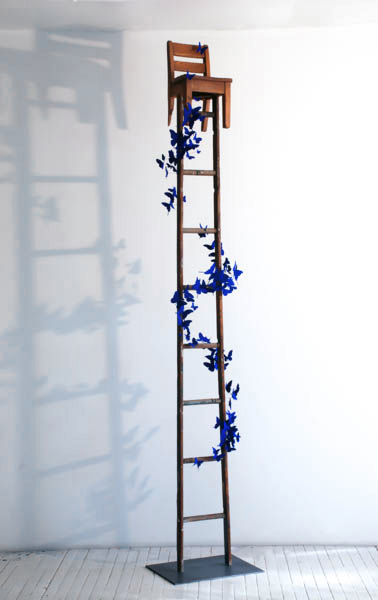
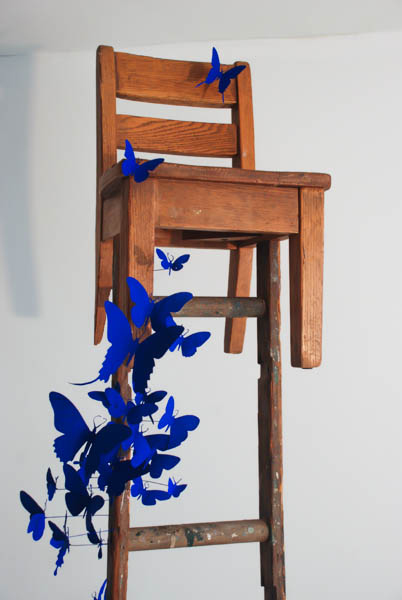
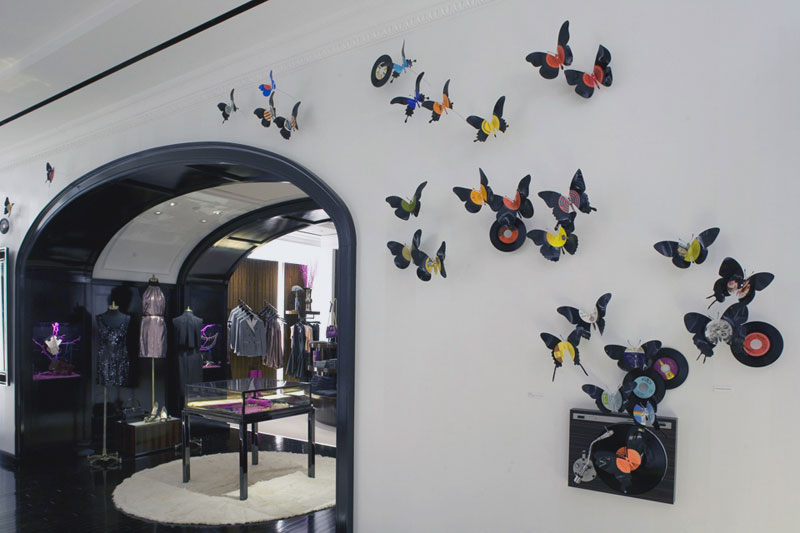
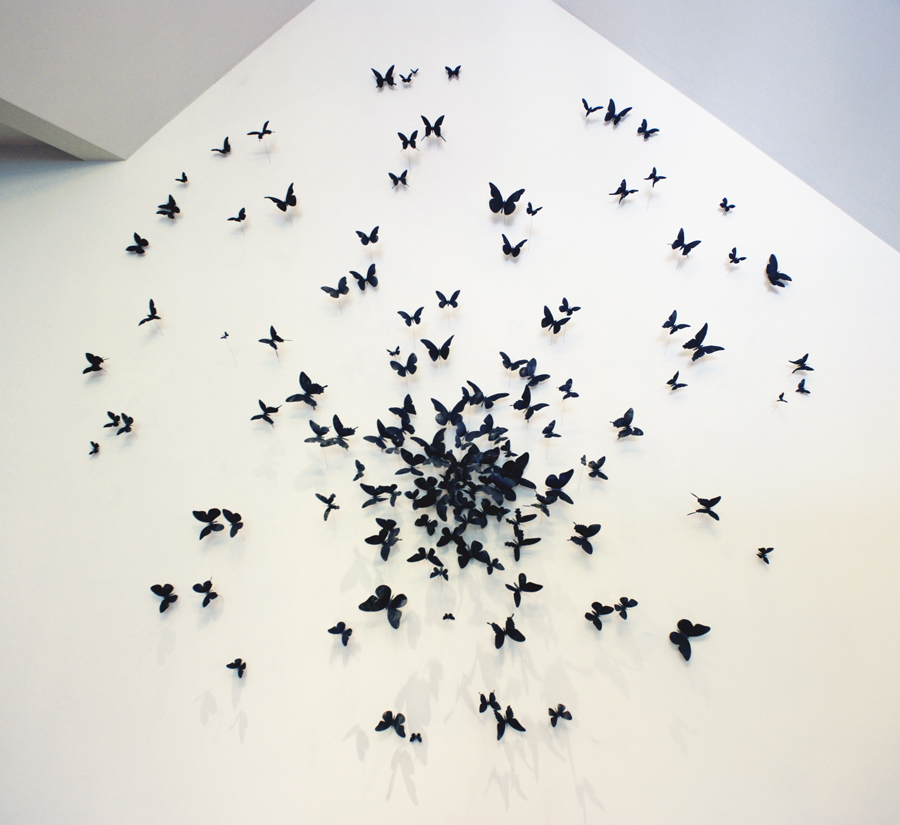
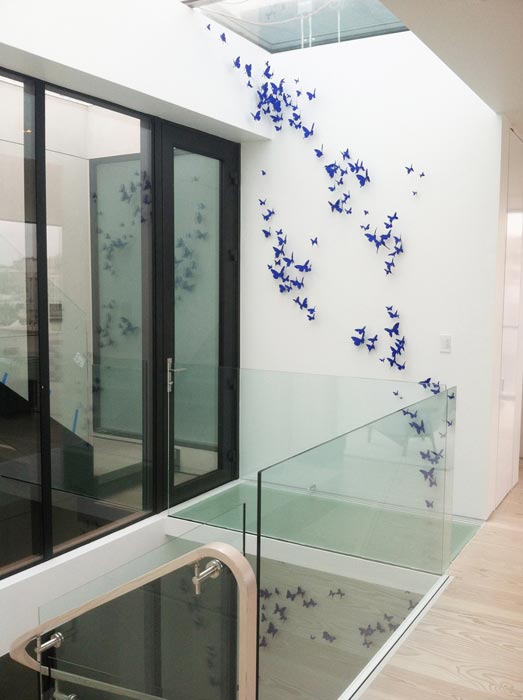
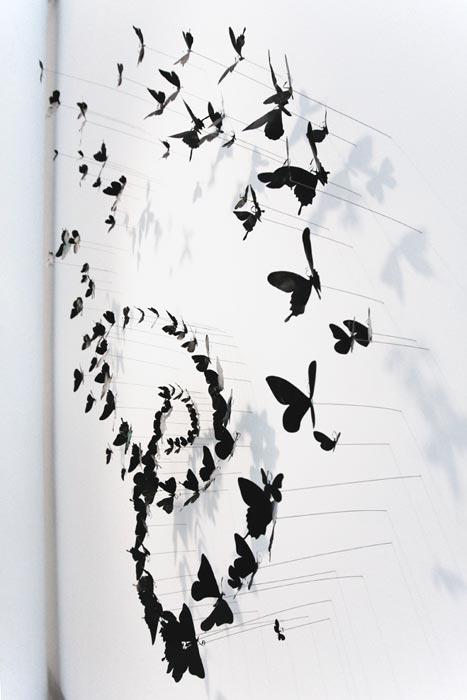
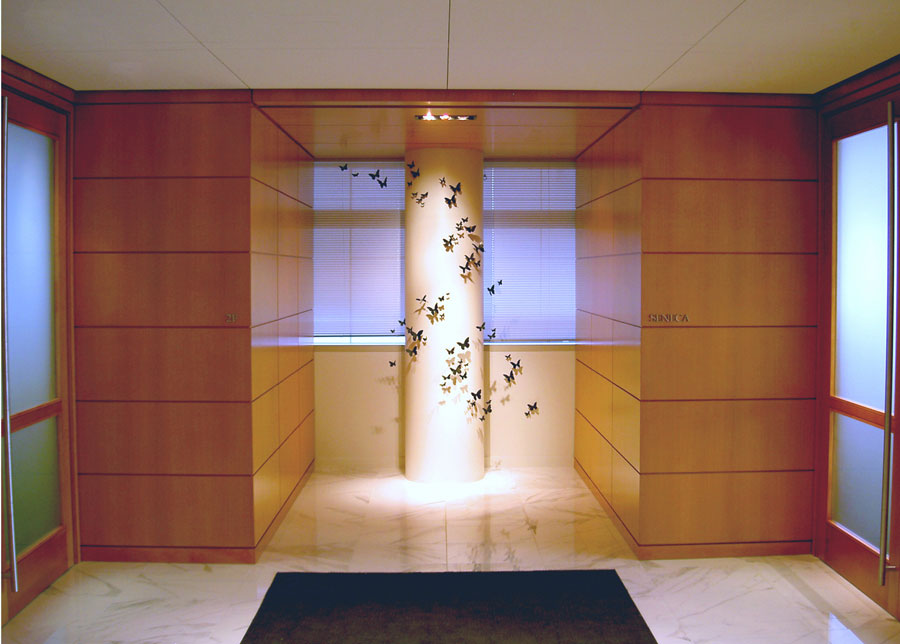
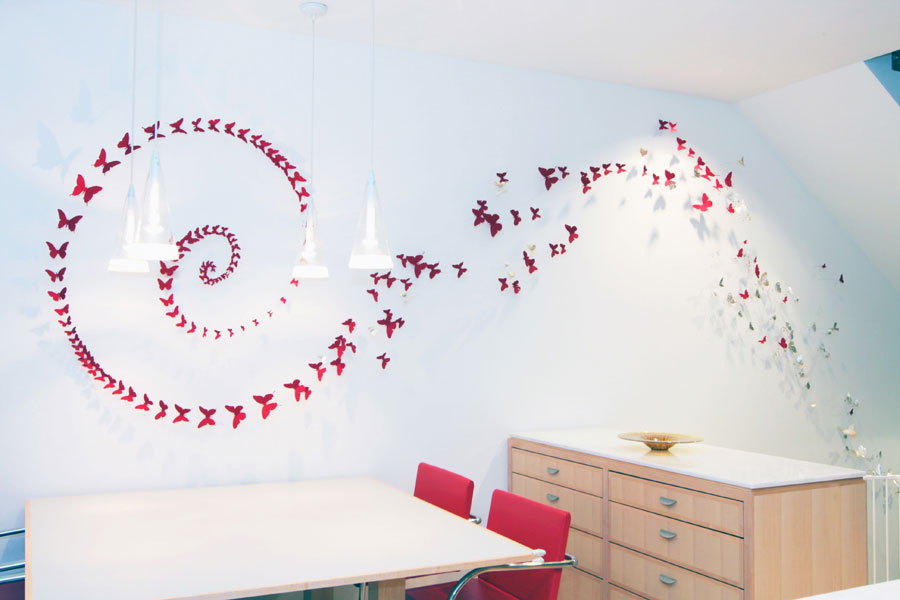
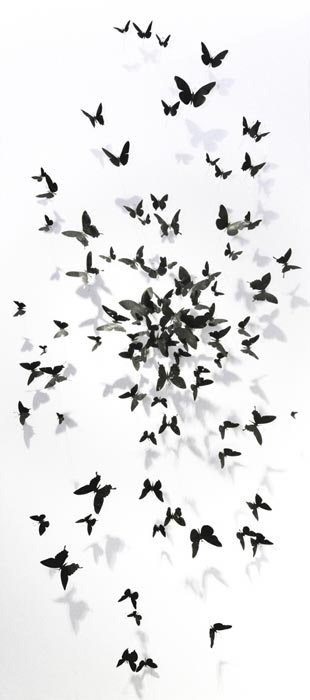
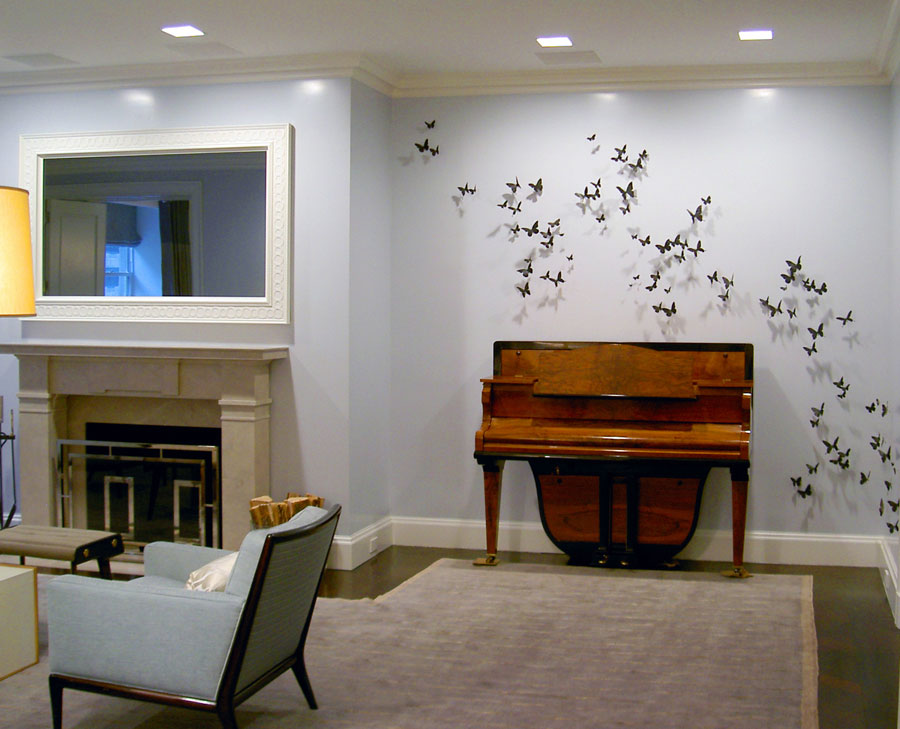
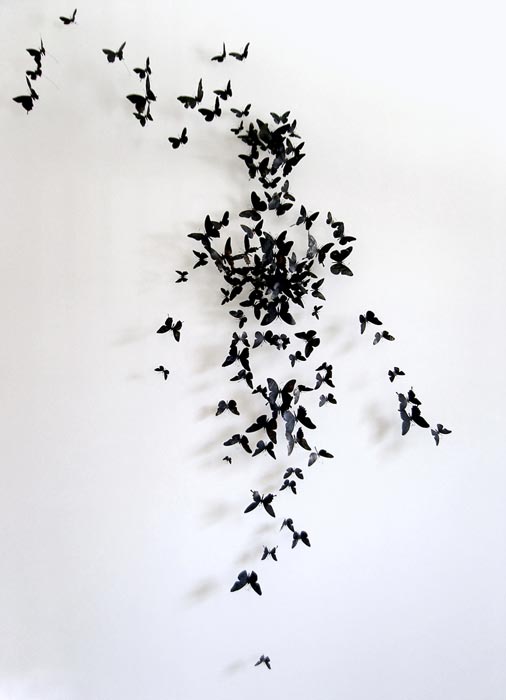
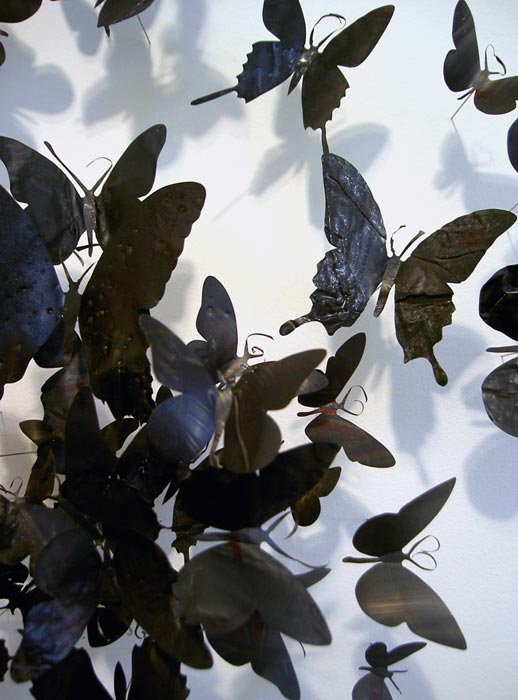
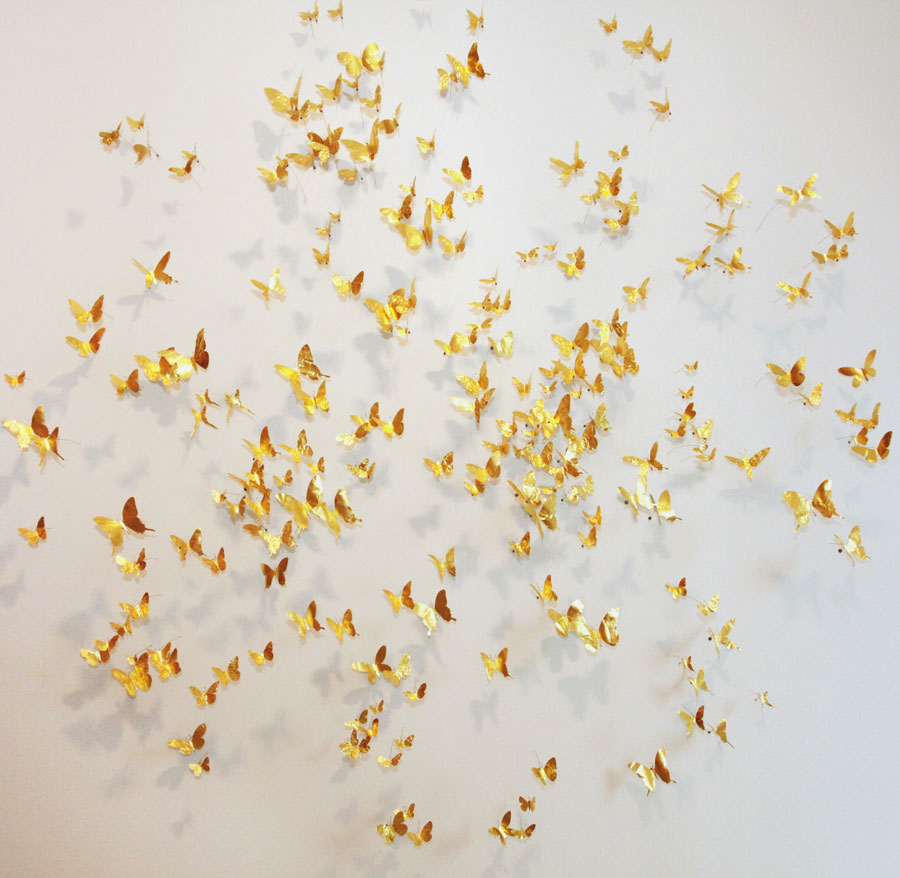
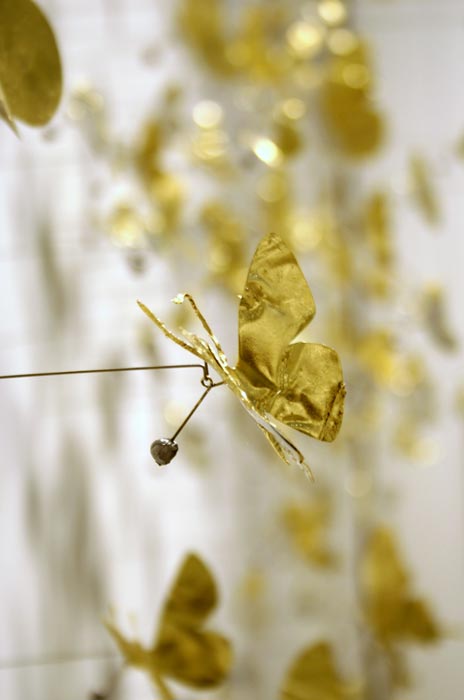
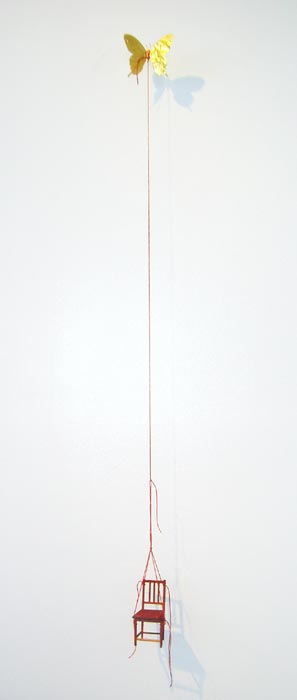
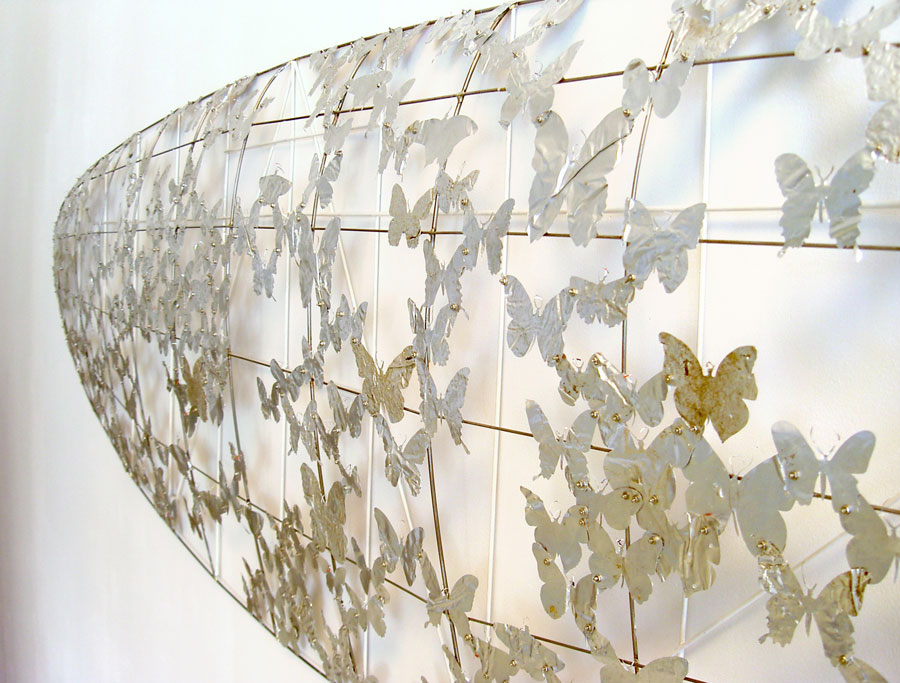
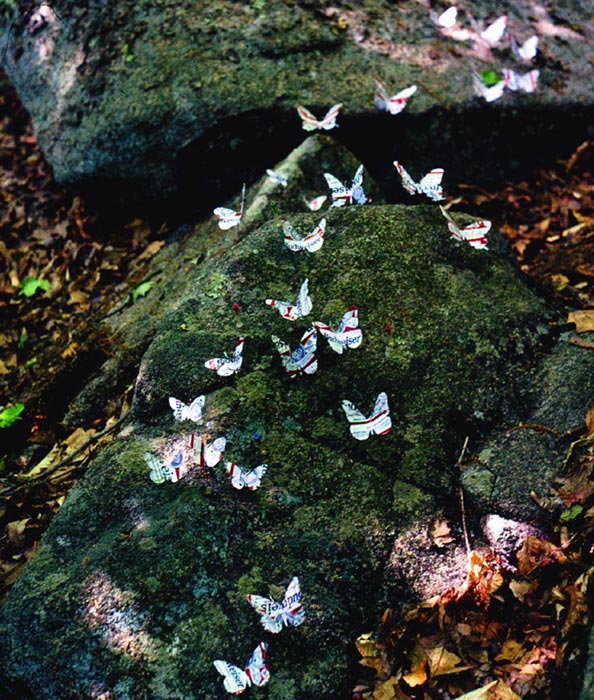
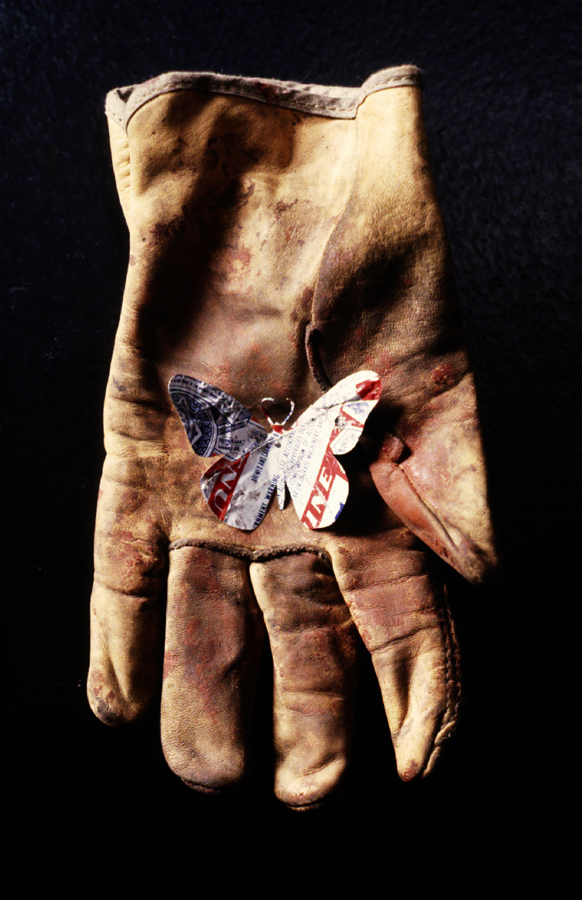
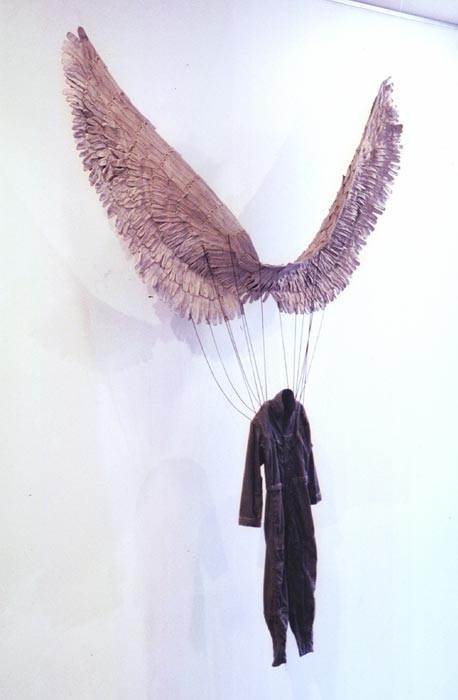
Who leaves these crushed beer cans – forlorn evidence scattered in the streets of the city? I take these “dead soldiers” – every one of them once raised to someone’s lips – and breathe new life into them, changing them into images that suggest the possibility of change itself. A kind of conceptual unity develops between materials, process and imagery: my practice in the studio mimics the act of transformation that butterflies symbolize everywhere, in all cultures.
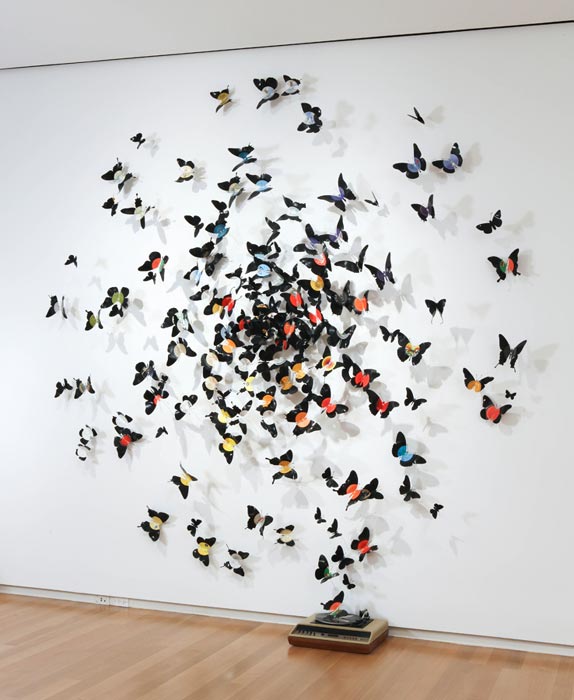
Our grandchildren will laugh in disbelief at the vast resources we squander, manufacturing a plastic bottle for a pint of water, or mining aluminum to surround 12 ounces of beer with metal. One generation’s trash will be another’s treasure. These littered beer cans are humble, but worthy materials, and it’s gratifying to take this “trash” and turn it into something of beauty and meaning.
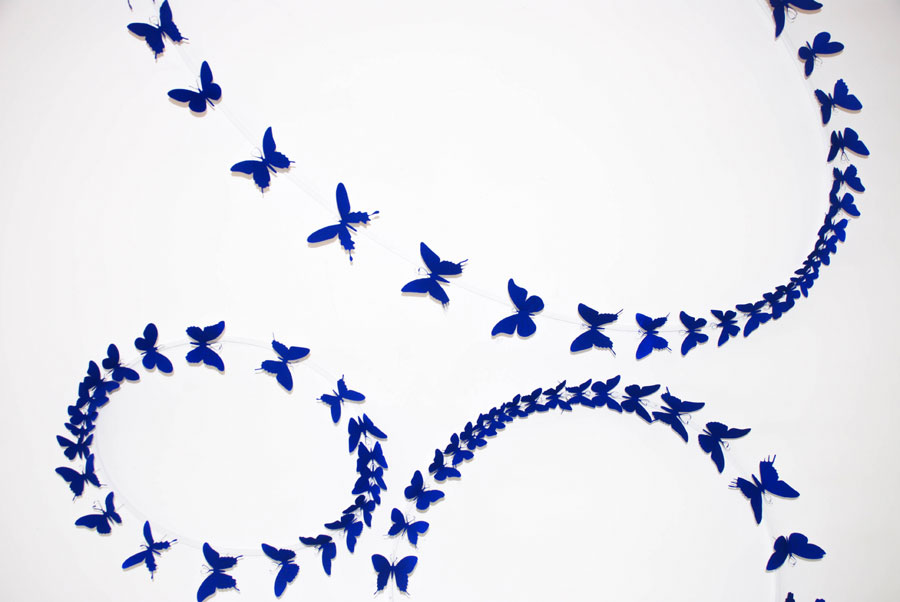
The process of making this work is a kind of physical meditation, a yoga of tin snips and files and fingers. One has to find a bit of inner stillness to craft the delicate antenna of a butterfly from a crumpled beer can. I trust this meditative quality informs the work and suggests its larger possibilities.
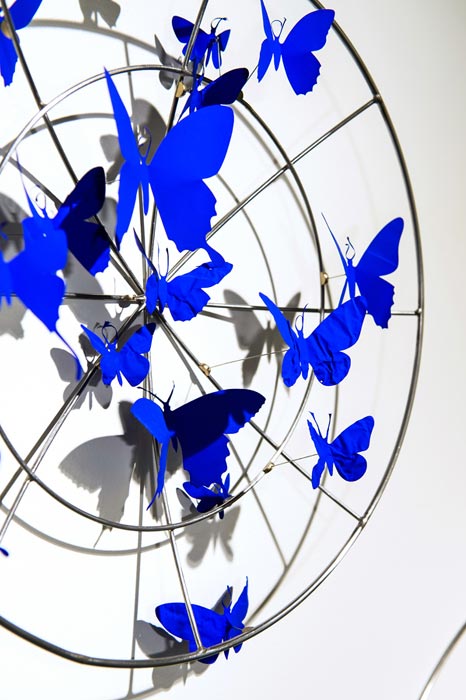
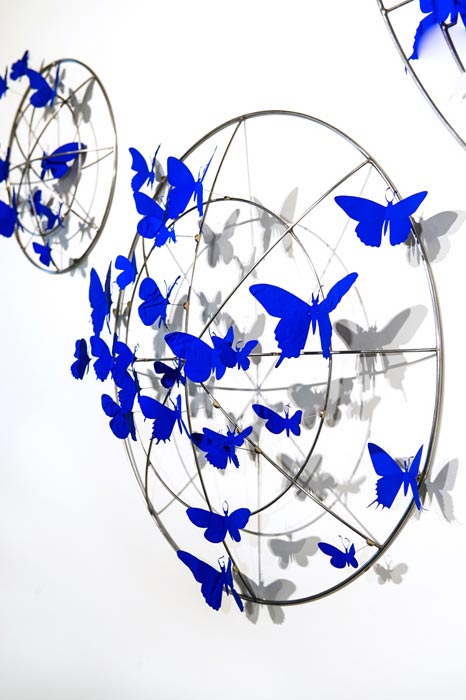
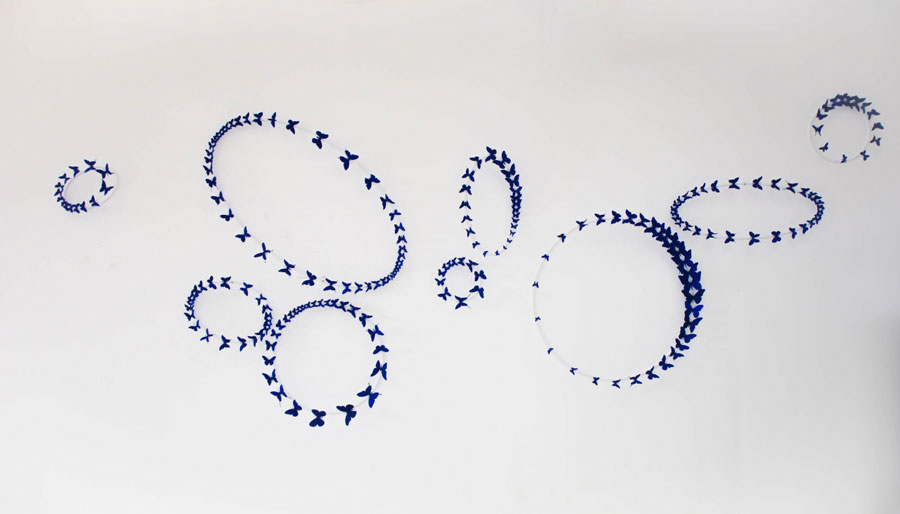
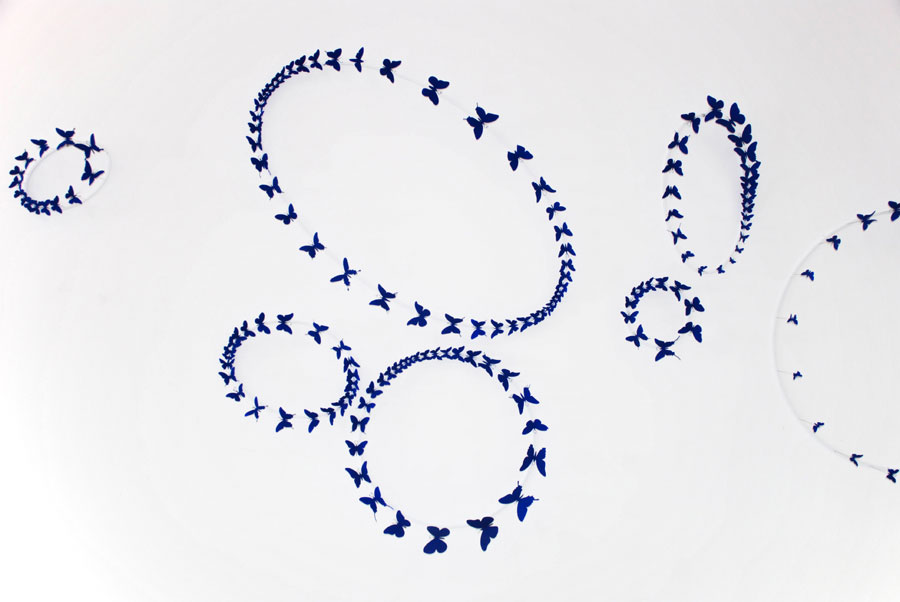
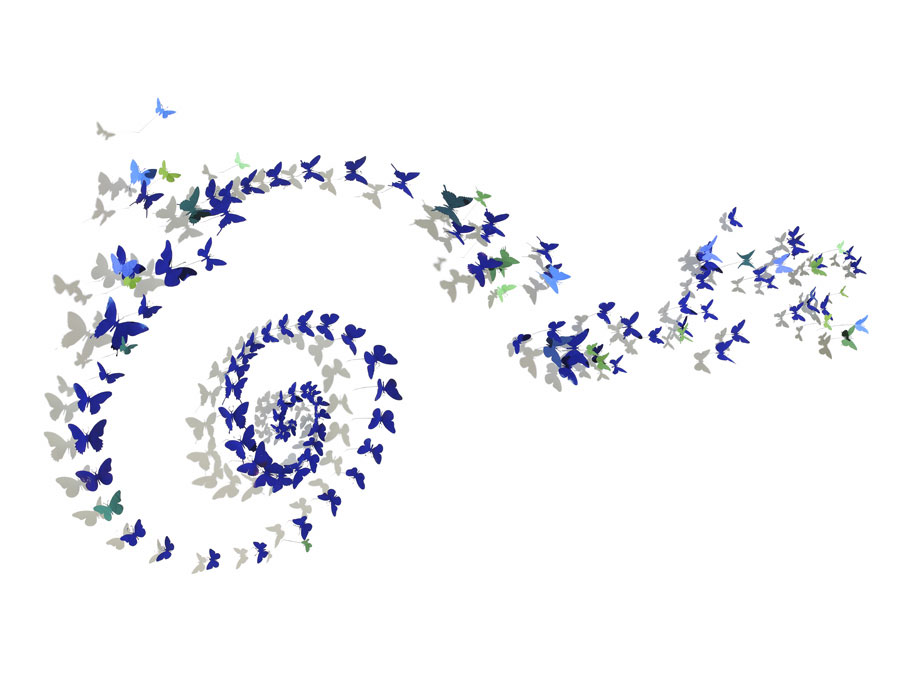
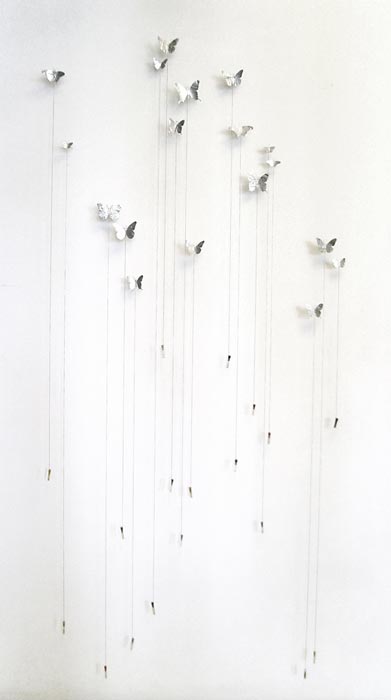
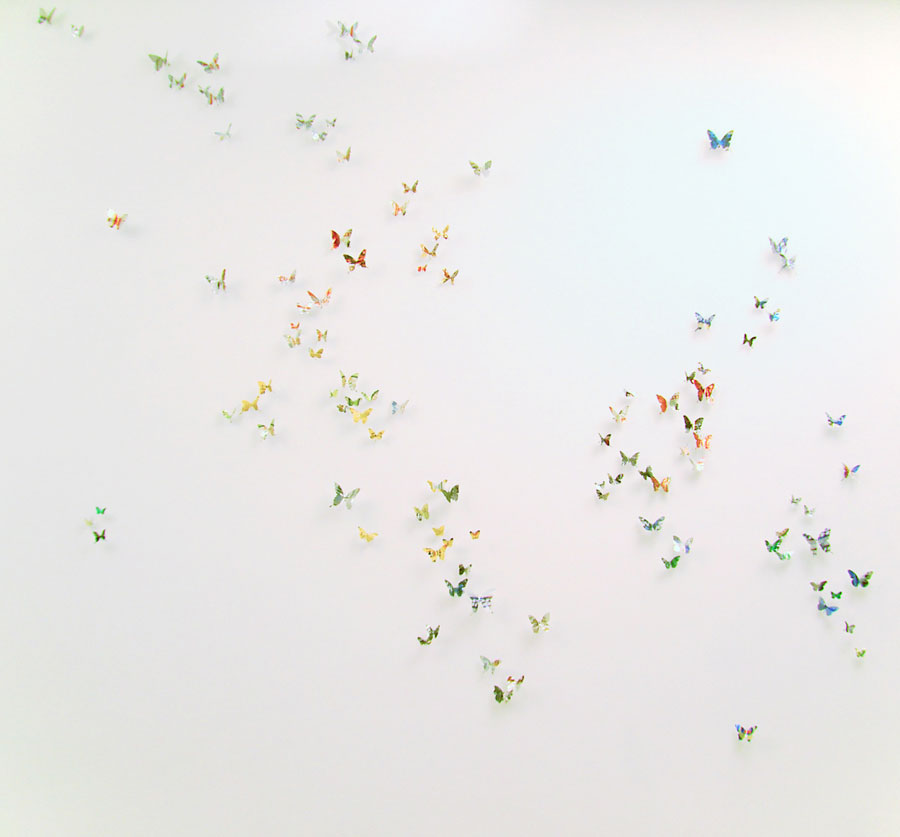
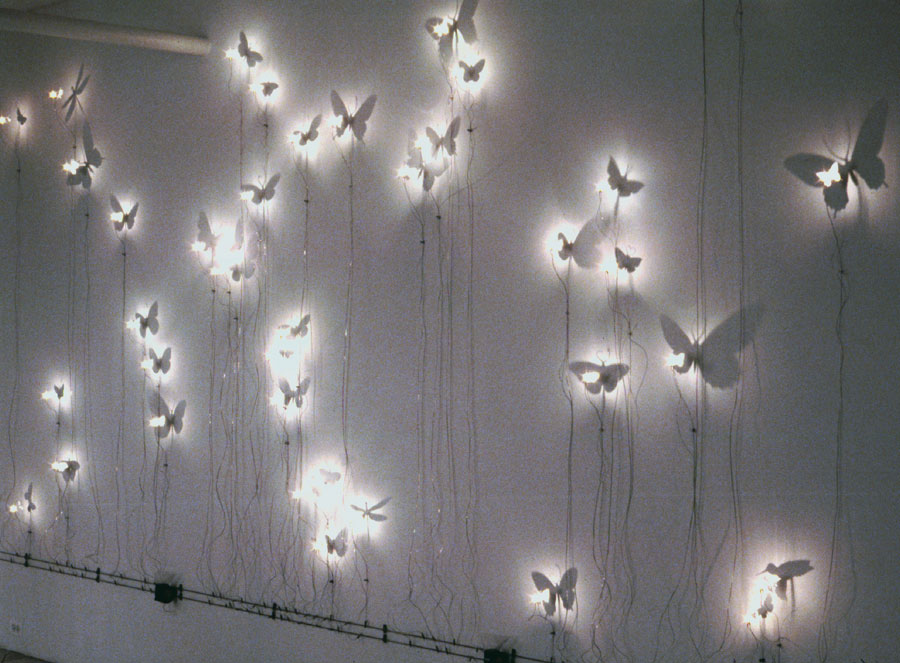
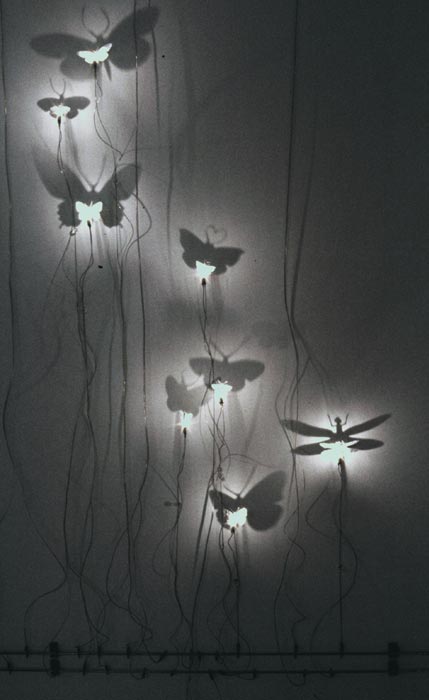
The beer can butterflies are like snowflakes, no two exactly alike. Many are imprinted with the textures of the streets of New York, embossed by the printing press of passing traffic. While each element is unique, individual, they are rarely alone. They rest or fly en masse, flowing in the same direction or diverging, each on its own path – a dream of harmony and community.
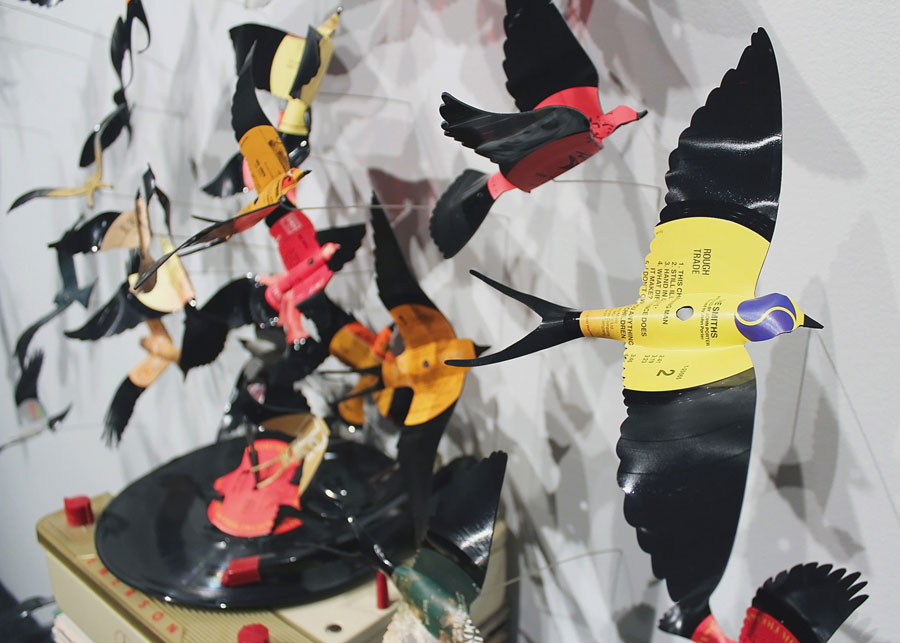
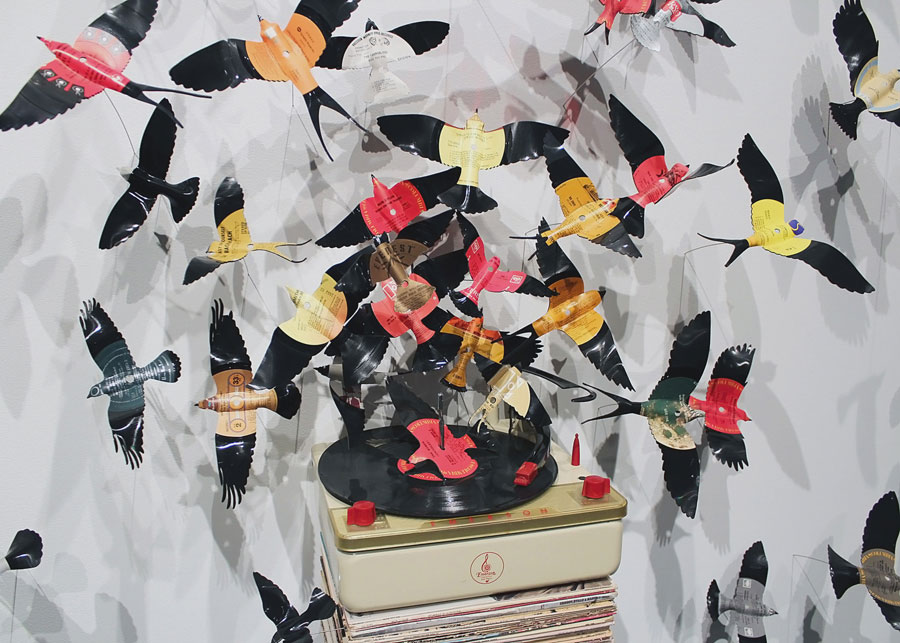
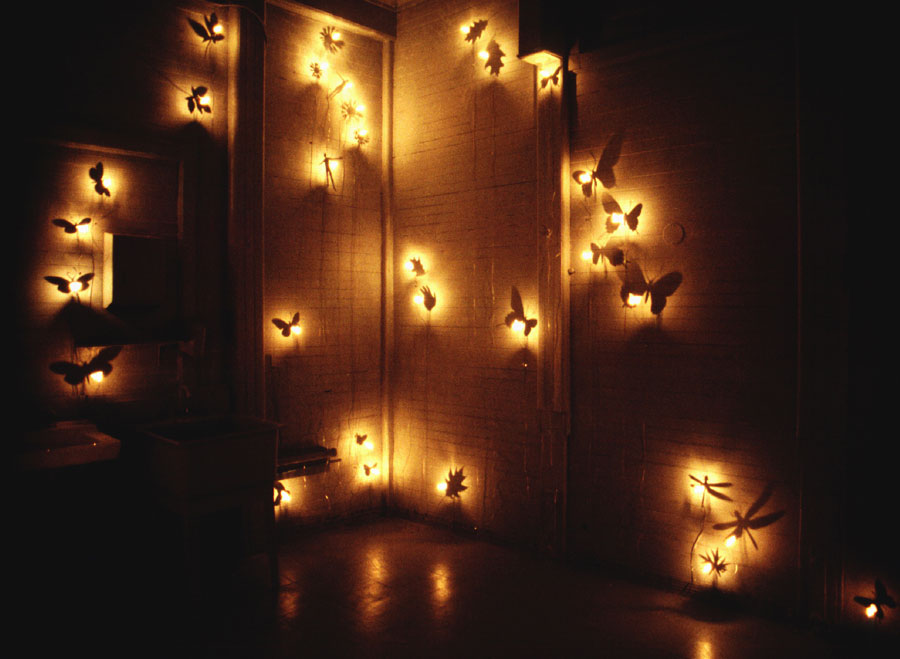
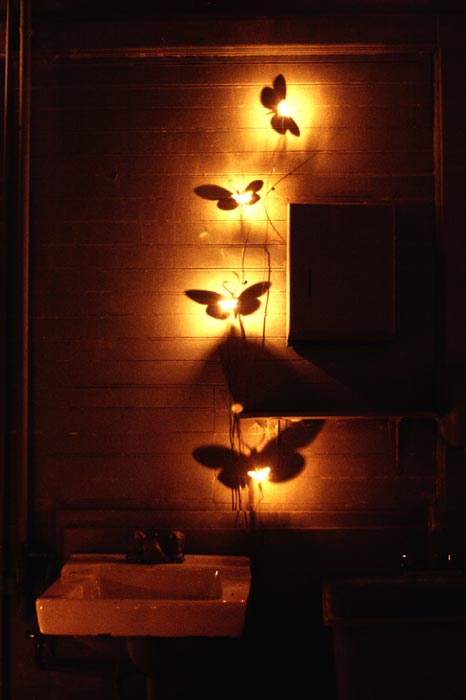
I love the way certain things make air “visible”; the way long grasses describe the motion of the wind, and cumulus clouds reveal where warm air is moving skyward. One night a breeze through an open window in my studio suggested the possibility of balancing and animating the butterflies with airflow. These pieces can be utterly tranquil and still – then a bit of movement in the air causes a butterfly to flutter, a small surprise seen out of the corner of one’s eye from across the room. (Did that just happen?)
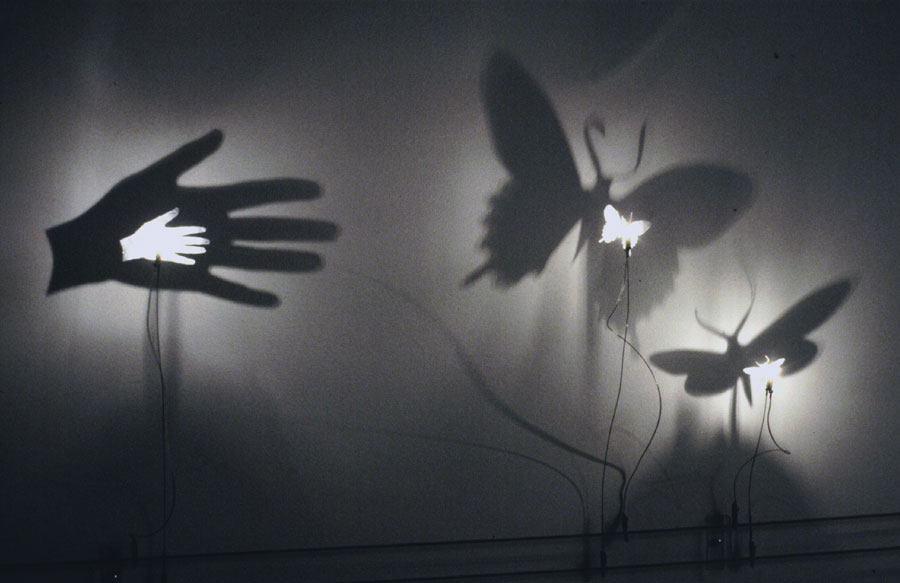
As the butterflies flock onto the walls of my studio, they lead into an exploration of formal issues: composition, rhythm, color, implied line, etc., and this increasingly directs the form the work takes. Often, the butterflies want to fly off on a particular tangent, or gather into a certain shape, and I simply let them. Still, while they may describe a big blue square, or a long black ellipse on the wall, they are not, of course, simply abstractions. The pieces collocate the abstract and the representational. The butterflies function both as elements in abstract, geometric “paintings,” and as actors in symbolic narratives where insects assemble into recognizable patterns. I think of the color fields of Yves Klein and the compositions of Andrew Goldsworthy, and of the “magic realism” of Gabriel Garcia Marquez and the narratives of Kiki Smith. Some pieces have a quirky, otherworldly quality, like a strange child has trained the insects, or as if the butterflies are performing some ritual dance we are not usually privy to.
From Walmart to Madison Avenue, there are literally millions of clichéd and hackneyed images of butterflies, adorning everything from toothbrushes to upholstery to diamond-encrusted key fobs. It is daunting to work with this image, to try to reference its deeper cultural and spiritual resonance. I often feel like I’m on thin ice. Nevertheless, to me, butterflies are impossibly beautiful. How can these ridiculously delicate creatures, which seem to be blown about by the merest whiff of wind, actually fly many hundreds of miles to migrate each year? How can it be that an innate, intergenerational GPS guides them year after year to the same tree? Are we more like them than we suspect, or could we be?
^ less


_web.jpg)